 how-to
Private Financing for Commercial Properties With Code Violations
Table of Contents
- Why Banks Reject Commercial Properties With Code Violations
- How Private Financing Works for Commercial Real Estate
- Hard Money Loans for Commercial Real Estate: Speed and Flexibility
- Commercial Property Loans for Borrowers With Bad Credit
- Commercial Real Estate Bridge Loans: Closing the Gap
- Documentation and Underwriting for Violation-Impacted Properties
- Remediation Timeline and Financing Structure
- Frequently Asked Questions
Last Updated: October 9, 2026
Why Banks Reject Commercial Properties With Code Violations
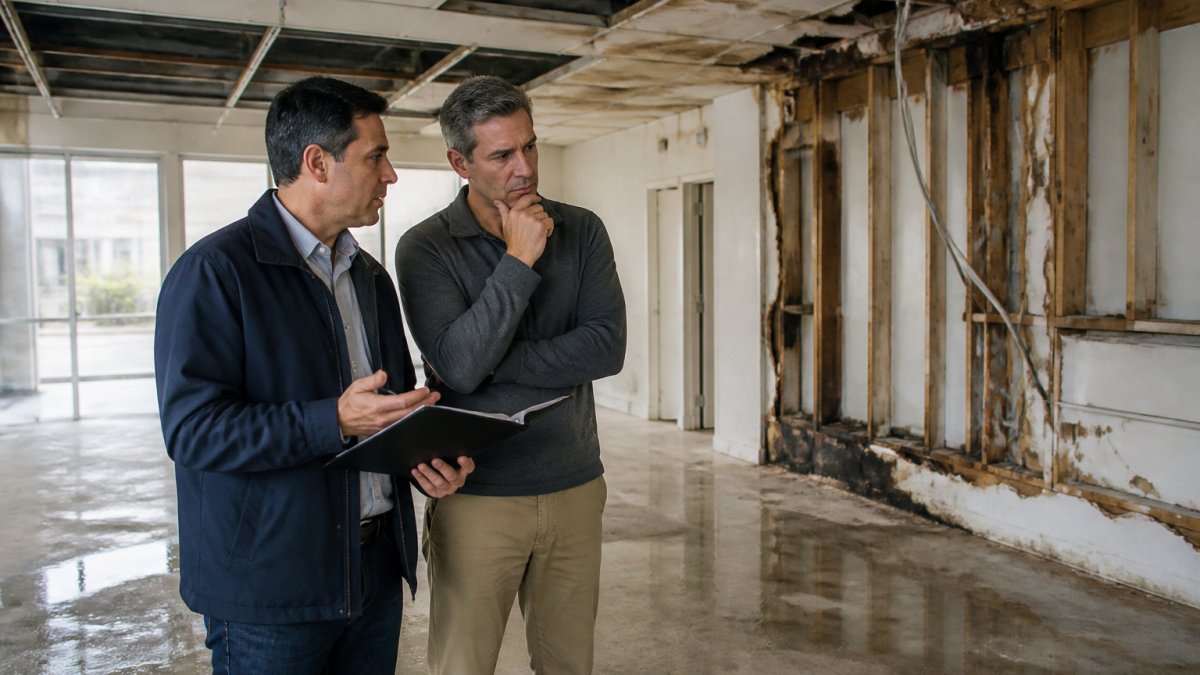
Banks turn down commercial property loans for code violations because they see liability, not opportunity: potential fines, forced closures, or costly remediation that could eat into the property's value, which is why private financing commercial properties becomes necessary when traditional lenders won't move.
Banks also worry about your ability to fix the problems. They want proof the property will pass inspection before funding. Code violations create uncertainty, which is why private financing for commercial properties makes sense when traditional banks won't move.
What banks actually fear is a property that becomes unsellable or unrentable mid-loan. If you can't remediate the violations, the collateral loses value and the bank's security interest weakens, so they decline.
Private lenders think differently. They see code violations as fixable and focus on the property's underlying value, structuring loans that account for remediation costs and timelines.
How Private Financing Works for Commercial Real Estate
Private financing for commercial properties is capital from non-bank sources: individuals, lending partnerships, or specialized firms. Lenders evaluate the deal based on equity, not credit score alone.
Here's how the process works:
- You own or are buying a commercial property
- The property has code violations or is in poor condition
- You need capital to acquire it, fix it, or refinance it
- A private lender reviews the property's value after repairs
- They offer a loan secured by the property itself
- You use the funds to close the purchase or fund remediation
- You repay the loan from rental income, sale proceeds, or business cash flow
Private lenders move fast, many fund in 48-72 hours, skipping bank approval committees and compliance reviews.
The tradeoff is cost: private loans carry higher interest rates and fees than bank mortgages. For someone facing foreclosure or needing to move quickly, that price of speed is worth it.
Key differences from traditional bank financing:
- Speed: days instead of months
- Flexibility: lenders adjust terms for your situation
- Collateral-focused: they care about property value, not your credit
- Equity-based: your down payment and property equity matter most
- Exit strategy: lenders want to know how you'll repay
We evaluate each deal on its own merits. Code violations don't automatically disqualify you. What matters is whether the property has value after repairs and whether you have a realistic plan to fix it.
Hard Money Loans for Commercial Real Estate: Speed and Flexibility
Hard money loans are a specific type of private financing for commercial properties: short-term, asset-based loans for investors who need capital quickly.
Hard money lenders focus on the property, not your personal finances: what's it worth today, what's it worth after repairs, how much equity do you have, and what's your exit strategy?
When hard money makes sense:
- You're buying a distressed property at auction
- You need to close before a foreclosure sale
- You're flipping a property and need fast capital
- You have equity in another property to use as collateral
- Your credit doesn't qualify for bank financing
- You need bridge financing between deals
Hard money lenders understand code violations. They've seen investors remediate and resell for profit, which makes them willing to lend when banks won't.
The catch: hard money is expensive. Use it strategically, then refinance into a traditional mortgage once the property is repaired and stabilized.
Commercial Property Loans for Borrowers With Bad Credit
Banks use credit scores as a primary filter: below 680, most decline you automatically, and below 650 you're locked out.
Instead, they ask: Do you have equity? Is the property worth enough to cover the loan on foreclosure?
Bad credit happens for reasons, bankruptcy, late payments, collections, job loss, divorce, medical emergency.
What private lenders evaluate for bad-credit borrowers:
- Current income and cash flow
- Equity in the property
- Your plan to fix and stabilize the property
- How long since the credit event
- Whether you've stabilized your finances since
- Your track record with previous real estate deals
This is why commercial property loans for borrowers with bad credit exist as a distinct financing option, opening doors that traditional lending closes.
You'll pay more: higher rates, larger down payments, shorter terms. But you get access to capital when you need it most.
Commercial Real Estate Bridge Loans: Closing the Gap
Bridge loans solve a specific problem: you need money now, but your long-term financing isn't ready.
Scenario: You found a commercial property at a great price, the seller wants to close in 30 days, and your bank mortgage will take 60 days to approve.
Bridge loans are expensive and temporary, but they let you win auctions by closing fast, lock in a price before the property sells, and buy time for permanent financing to process.
Bridge loan structure for violation-impacted properties:
- Borrow 70-80% of the property's current value
- Use funds to close the purchase
- Reserve capital for remediation costs
- Complete repairs within 6-12 months
- Refinance or sell to repay the bridge loan

Documentation and Underwriting for Violation-Impacted Properties
Start with the distinction that drives everything else: a violation is not a single category.
Tier 1, Administrative and paperwork violations. Expired permits, missing certificates of occupancy, unrecorded work, signage or setback issues.
Tier 2, Life-safety and systems violations. Fire suppression, egress, electrical panels, gas lines, elevators, ADA access.
Tier 3, Structural, environmental, or condemnation-adjacent issues. Foundation failure, load-bearing compromise, mold or asbestos, unsafe-structure placards. These push the deal into specialist territory.
The documents that actually move underwriting
A violation notice alone tells a lender almost nothing.
- The violation notices themselves, pulled from the local building, fire, or code enforcement department, not a borrower's summary. Lenders want the case number, issuing department, compliance deadline, and whether the matter is still open.
- A current inspection or engineering report identifying each deficiency by location and severity.
- A written scope of work from a licensed contractor, itemized by violation, with unit costs and a completion schedule.
- Permit applications or approvals, or written confirmation from the jurisdiction that the proposed work will be permitted.
- Contractor credentials, license number, insurance certificate, and performance history for larger jobs.
- A remediation budget with contingency, commonly 10-20% above the contractor's hard bid to absorb change orders and inspection-driven additions.
- Evidence of funds or a financing source for any repair cost the loan won't cover.
How the lender values the property
This is the part borrowers most often misunderstand.
- As-is value reflects the property in its current, non-compliant condition, often supported by a broker opinion of value or a drive-by appraisal rather than a full interior appraisal.
- As-repaired value is the stabilized value once all violations are cured and the property is rentable or sellable, supported by comparable sales of compliant, stabilized properties.
- Loan sizing generally lands between the two, with the lender holding back enough capital to guarantee repairs happen.
Title, liens, and municipal exposure
Unpaid code fines can become municipal liens that attach to the property and survive closing.
What makes a file fundable
Lenders aren't looking for a perfect property.
HUD code enforcement and municipal lien guidance
Remediation Timeline and Financing Structure
The structure of the loan and the length of the remediation are the same decision.
Match the structure to the work, not the other way around
- Acquisition-plus-remediation loan. The loan covers the purchase price and a repair budget in a single closing. Repair funds sit in a holdback or repair escrow and release in draws as work is completed and inspected, the cleanest structure when the borrower wants one closing and one set of fees.
- Acquisition-only loan with separate repair capital. The lender funds the purchase; the borrower funds repairs from cash or a separate line. Simpler to underwrite, but it concentrates risk on the borrower and usually requires more equity.
- Bridge-to-permanent. A short-term bridge closes the purchase and funds repairs; a permanent loan arranged in parallel pays off the bridge once the property is stabilized and compliant. Most common for investors who intend to hold.
- Construction or draw loan. For ground-up or heavy rehab, funds release against completed milestones verified by a third-party inspector. Draws are slower and more documented, but protect both parties.
How draws actually work
A holdback is not a lump sum the borrower can spend. It releases in stages, typically after each milestone is inspected and, where required, signed off by the municipality:
- Initial draw at closing for permits and mobilization.
- Progress draws as each violation category is cured and inspected.
- Final draw only after the certificate of occupancy or compliance sign-off.
Each draw usually requires a draw request, contractor invoices, lien waivers, and photographic evidence.
Realistic timelines
Timelines vary by jurisdiction and severity, but a few patterns hold:
- Permit issuance is often the longest single step: 2-8 weeks for straightforward commercial work in many municipalities, longer for structural or life-safety scopes.
- Electrical, plumbing, and fire-safety corrections commonly run 2-8 weeks once permits are in hand.
- Structural repairs typically run 4-12 weeks, longer if engineering review is required.
- Multiple overlapping violations frequently push total remediation to 8-16 weeks or more.
- Reinspection and sign-off adds 1-3 weeks after the work is physically complete.
A practical rule: take the contractor's estimate, add the permit window, add the reinspection window, then add a contingency of several weeks.
What happens when the deadline is missed
This is the part most articles skip, and where borrowers get hurt.
- Extension fees. Most private loans allow an extension, but it's priced: expect an extension fee and often a higher rate during the extension period.
- Default rate. If the loan matures without an extension, the note may convert to a default interest rate, frequently several points above the contract rate.
- Draw suspension. A lender may freeze remaining holdback funds if milestones aren't met, stranding a contractor mid-job.
- Municipal escalation. If the jurisdiction's compliance deadline passes, fines can accrue daily and the municipality can pursue abatement and place a lien, complicating both the refinance and the sale.
Build the remediation schedule backward from the loan maturity date, not forward from today. If the math does not leave at least a two-month cushion before maturity, either negotiate a longer term up front or reduce the scope.
Exit strategy math
A private lender on a violation-impacted property will ask how the loan gets repaid, and "we'll refinance" is not an answer. Credible exits are:
- Refinance into permanent financing once the property is compliant and stabilized. Proceeds pay off the private loan; the borrower keeps the asset.
- Sale of the stabilized property. Proceeds retire the loan. Works best when as-repaired value comfortably exceeds loan balance plus remediation cost plus carrying costs.
- Business cash flow. For owner-occupied commercial property, stabilized operating income can service a permanent loan after remediation.
Run the numbers before closing: purchase price + remediation cost + contingency + carrying costs (interest, taxes, insurance, permits) versus as-repaired value.
A note on jurisdiction
Building, fire, zoning, and occupancy rules are local.
Frequently Asked Questions
Can you get financing for a commercial property with code violations?
Yes. Private lenders assess commercial properties with code violations based on equity, repair costs, and exit strategy rather than current compliance status. Unlike traditional banks, private financing evaluates the property's post-remediation value and the borrower's ability to fund repairs. Documentation of violations, contractor bids, and a realistic remediation timeline strengthen your application.
What are the benefits of private financing for a commercial property?
Private financing offers speed (closing in days rather than weeks), flexible underwriting that accounts for code violations and credit challenges, equity-based lending that doesn't rely solely on credit scores, and direct capital without traditional bank gatekeeping. Borrowers with bad credit or distressed properties access funding when conventional lenders decline.
How quickly can private financing close on a commercial property?
Private lenders typically close commercial real estate transactions in 7-14 days, with some completing funding within 48-72 hours for straightforward deals. Speed depends on documentation completeness, property condition assessment, and lender capacity. Faster closings require clear title, accurate repair estimates, and a defined exit strategy.
What documents do private lenders require for a commercial property loan?
Private lenders request title report, property inspection and code violation documentation, detailed contractor repair bids, proof of business ownership or investment history, recent tax returns or financial statements, and a written business plan showing how you'll remediate violations and generate returns. Code-violation properties require additional documentation: municipal inspection reports, violation notices, and remediation timelines.