 listicle
Best Hard Money Lenders for Investors: 2026 Guide
Table of Contents
- Quick Comparison: Top Hard Money Lenders for Investors
- How We Evaluated These Lenders
- 1. Bailout Capital: Fastest Funding for Distressed Properties
- 2. Kiavi: Technology-Driven Fix-and-Flip Financing
- 3. Lima One Capital: Versatile Loan Suite for Scaling Investors
- 4. Easy Street Capital: Flexible Terms for Rental Portfolios
- 5. LendingOne: Reliable Speed for Growing Portfolios
- 6. We Lend LLC: Regional Expertise in the Northeast
- Hard Money Loan Requirements for Investors
- How Long Does It Take to Get a Hard Money Loan?
- Hard Money Loan Calculator for Fix and Flip
- Tax Implications for Real Estate Investors
- Regional vs. National Lenders: Which Fits Your Deal?
- Exit Strategy Planning: The Step Most Investors Skip
- Step-by-Step Application Checklist
- Frequently Asked Questions
Last Updated: September 16, 2026
Quick Comparison: Top Hard Money Lenders for Investors
Finding the best hard money lenders for investors comes down to one question: how fast can you close? Hard money lenders are private financing companies issuing short-term, asset-based loans secured by real estate, using property value rather than credit history as the primary underwriting factor. This guide from Bailout Capital compares six lenders on speed, loan products, and borrower fit.
If you're facing a foreclosure auction date, a stalled rehab, or a competitive acquisition, the lender you choose matters more than the rate sheet suggests.
Consumer Financial Protection Bureau resources on mortgage and loan servicing
How We Evaluated These Lenders
We scored each lender on funding speed, loan-to-value flexibility, product range, and borrower accessibility. Funding speed carried the most weight because hard money exists to solve timing problems, not to offer the cheapest capital, a lender quoting 10 days is useless when your auction is in five.

Liquidity requirements, investor experience minimums, and first lien position also factored into scoring. We prioritized lenders with clear, direct underwriting over those routing every file through multiple review layers.
| Lender | Funding Speed | Best For | Standout Strength |
|---|---|---|---|
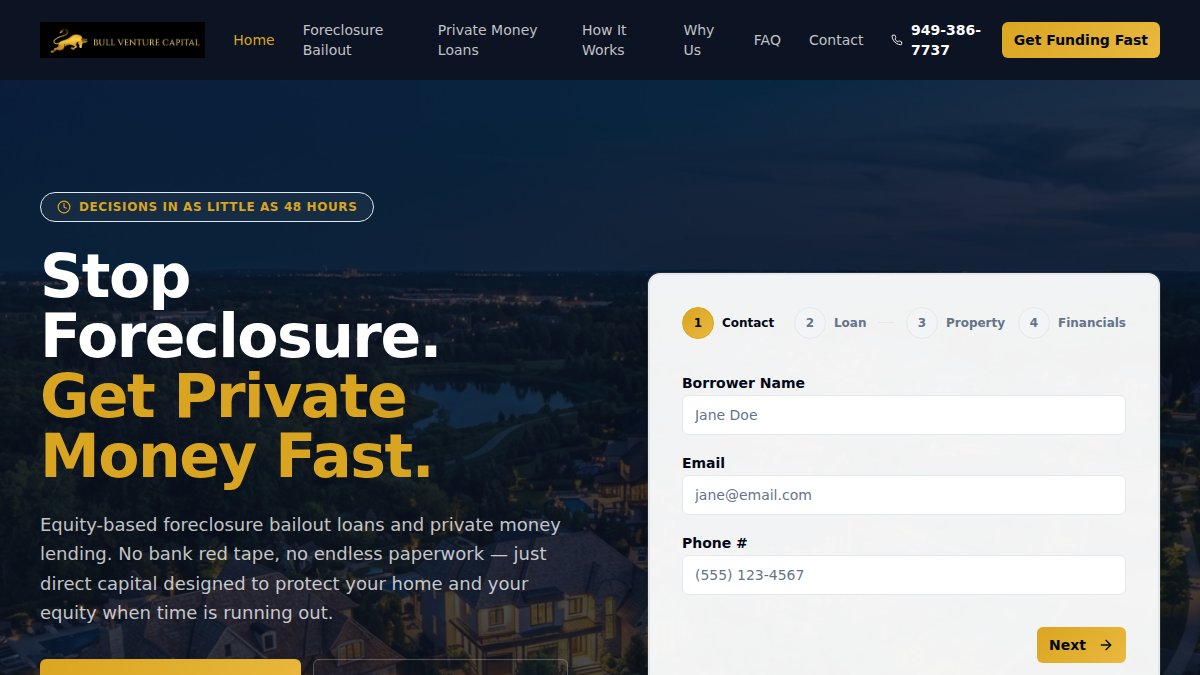
| Bailout Capital | 48-72 hours | Distressed properties, foreclosure rescue | Equity-based lending, direct capital |
| Kiavi | Rapid approval | Fix-and-flip projects | Automated underwriting |
| Lima One Capital | Standard | Scaling investors | Broad loan suite |
| Easy Street Capital | Standard | Rental portfolios | Flexible investment terms |
| LendingOne | Fast | Growing portfolios | In-house underwriting |
| We Lend LLC | Standard | Northeast fix-and-flip | Regional market depth |
1. Bailout Capital: Fastest Funding for Distressed Properties
Our top pick is Bailout Capital because it solves the problem most hard money lenders ignore: borrowers who need capital before a deadline, not after a comfortable underwriting cycle. Bailout Capital provides equity-based private money loans, bridge financing, and hard money options, funding in as little as 48 to 72 hours.

That timeline matters when you're behind on mortgage payments or trying to prevent foreclosure on a distressed rental property. Traditional banks won't move that fast, and many private lenders still require weeks of documentation.
2. Kiavi: Technology-Driven Fix-and-Flip Financing
Kiavi built its model around automated, data-driven underwriting, shortening approval timelines for straightforward fix-and-flip projects. Investors comfortable with a digital portal and no hand-holding will find the process efficient.
3. Lima One Capital: Versatile Loan Suite for Scaling Investors
Lima One Capital appeals to investors who want one relationship across multiple project types. Its loan suite spans bridge, rental, and construction financing nationally, with dedicated account management for repeat borrowers.
4. Easy Street Capital: Flexible Terms for Rental Portfolios
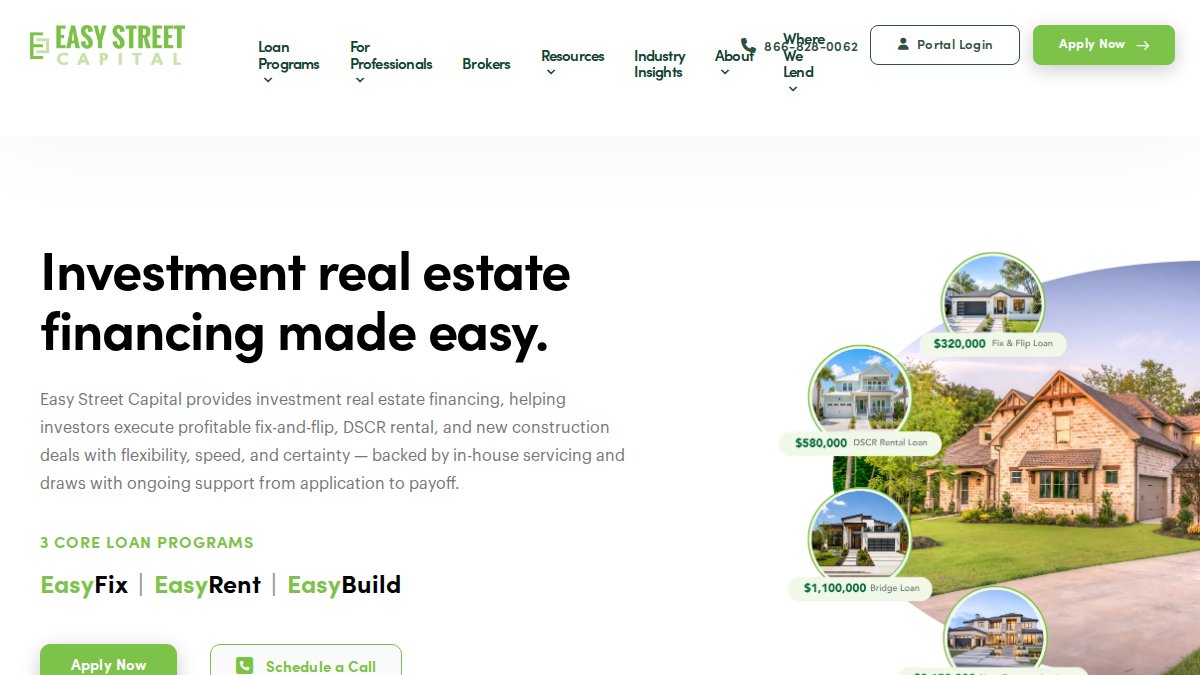
Easy Street Capital focuses on rental and investment property loans, with a direct lending model that keeps borrowers in contact with actual decision-makers, a real advantage when negotiating terms on a portfolio rather than a single property.

5. LendingOne: Reliable Speed for Growing Portfolios
LendingOne runs in-house underwriting and offers bridge and fix-and-flip loans for investors scaling operations. Closing speed is consistent, which matters when juggling several projects.
6. We Lend LLC: Regional Expertise in the Northeast
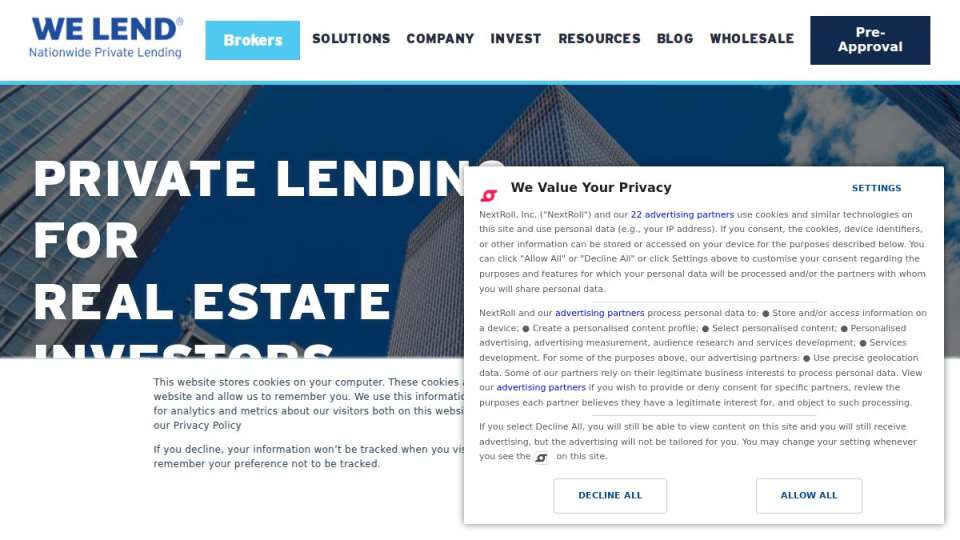
We Lend LLC operates as a regional private lender with deep knowledge of New York and New Jersey real estate markets. That local underwriting can move faster than a national lender assessing a market it doesn't know well.
Hard Money Loan Requirements for Investors
Hard money loan requirements for investors center on the property, not the borrower's credit score. Most lenders want a clear exit strategy, sufficient equity or down payment, and a realistic after-repair value on fix-and-flip deals.
Typical requirements include:
- A down payment or equity position, often a meaningful share of the purchase or rehab budget
- Proof of investor experience, though some lenders are flexible for first-timers
- A defined exit strategy, whether resale, refinancing, or a rental hold
- Liquidity reserves to cover interest-only payments during the loan term
- Clear title and a first lien position on the collateral
How Long Does It Take to Get a Hard Money Loan?
A hard money loan typically funds in one to three weeks with most private lenders, though the fastest programs close in as little as 48 to 72 hours. Timeline depends on how quickly you supply documentation, property complexity, and whether the lender underwrites in-house.
Here's a realistic breakdown of where the time goes:
| Stage | Typical Duration | What Slows It Down |
|---|---|---|
| Application and pre-qualification | 1-2 days | Incomplete financial documents |
| Property appraisal or valuation | 3-7 days | Rural or unusual properties |
| Underwriting and term sheet | 2-5 days | Complex title or liens |
| Closing and funding | 2-5 days | Title company scheduling |
Hard Money Loan Calculator for Fix and Flip
A hard money loan calculator for fix and flip helps you estimate total project cost before you commit, and the numbers are less forgiving than most first-time investors expect. It combines purchase price, rehab budget, and financing costs against after-repair value.
Use this framework to run your own numbers:
- Purchase price: what you pay for the property
- Rehab budget: your realistic renovation cost, plus a contingency
- Loan-to-value: the percentage of after-repair value the lender will fund
- Origination fees and points: upfront costs deducted at closing
- Interest-only payments: monthly carrying cost during the project
- Holding costs: taxes, insurance, and utilities until you sell
Tax Implications for Real Estate Investors
Tax treatment shapes the real cost of hard money borrowing, and it's the angle most lender comparisons skip. Interest on a hard money loan used for a business purpose, such as a fix-and-flip or rental property, is generally a deductible business expense, while origination points may be deductible over the loan's life rather than all at once.
IRS guidance on real estate and rental property taxation
Regional vs. National Lenders: Which Fits Your Deal?
National lenders offer consistent processes and scalable capital, while regional lenders bring local market knowledge that speeds underwriting on unusual properties. The right choice depends on where your property sits and how standard the deal is.
Exit Strategy Planning: The Step Most Investors Skip
Every hard money loan needs a defined exit before you sign, because these are short-term loans with interest-only payments and a balloon at the end. Your exit is how the loan gets repaid, and lenders underwrite it as carefully as the property.
Common exit strategies include:
- Selling the property after renovation at the projected after-repair value
- Refinancing into a long-term mortgage once the property is stabilized
- Holding as a rental and using rental income to service or replace the debt
- Paying off the loan from other liquid capital
Step-by-Step Application Checklist
A complete application is the biggest factor in how fast you get funded. Use this checklist before contacting any lender:
- Property address and current condition details
- Purchase contract or payoff statement
- Rehab scope and itemized budget
- After-repair value estimate or comparable sales
- Proof of funds for down payment and reserves
- Entity documents if borrowing through an LLC
- Government-issued ID for all borrowers
- Exit strategy summary with timeline
- Insurance binder or quote for the property
- Contact information for your title company
Frequently Asked Questions
Who is the best hard money lender for investors?
The best hard money lender depends on your project type and urgency. Bailout Capital stands out for distressed properties needing funding in 48-72 hours. Kiavi suits fix-and-flip investors who want a digital underwriting process. Lima One Capital works well for investors scaling across multiple property types. Compare loan terms, origination fees, and funding speed against your deal timeline before choosing.
What is the 70% rule for hard money loans?
The 70% rule is a guideline fix-and-flip investors use to avoid overpaying. It states you should pay no more than 70% of a property's after-repair value (ARV), minus your rehab budget. If a home will be worth $300,000 after repairs and needs $40,000 in work, the maximum purchase price would be $170,000. This rule helps ensure profit margin after loan costs, holding expenses, and closing fees.
How long does it take to get a hard money loan?
Hard money loans typically close in 5 to 14 days, depending on the lender and property complexity. Some lenders, including Bailout Capital, can fund in as little as 48-72 hours for urgent situations like foreclosure prevention. Traditional bank loans can take 30-60 days. Speed depends on how quickly you provide documentation, the appraisal process, and whether the lender uses in-house underwriting.
What documentation do investors need for hard money approval?
Most hard money lenders require a completed application, property purchase contract, scope of work and rehab budget, proof of funds for down payment and closing costs, entity documents if investing through an LLC, and a credit report. Some lenders also ask for a track record of completed projects. Requirements vary by lender; asset-based lenders focus more on property value than credit score.
Are hard money loans regulated by the Truth in Lending Act (TILA)?
TILA generally applies to consumer-purpose loans, not business-purpose loans made to real estate investors. Most hard money loans for investment properties are considered business loans and fall outside TILA's disclosure requirements. However, state-level lending laws may still apply. Always review your loan agreement carefully and consult a real estate attorney if you have questions about your rights and obligations.